Anger Management for Dads: What to Do When You Lose Your Cool
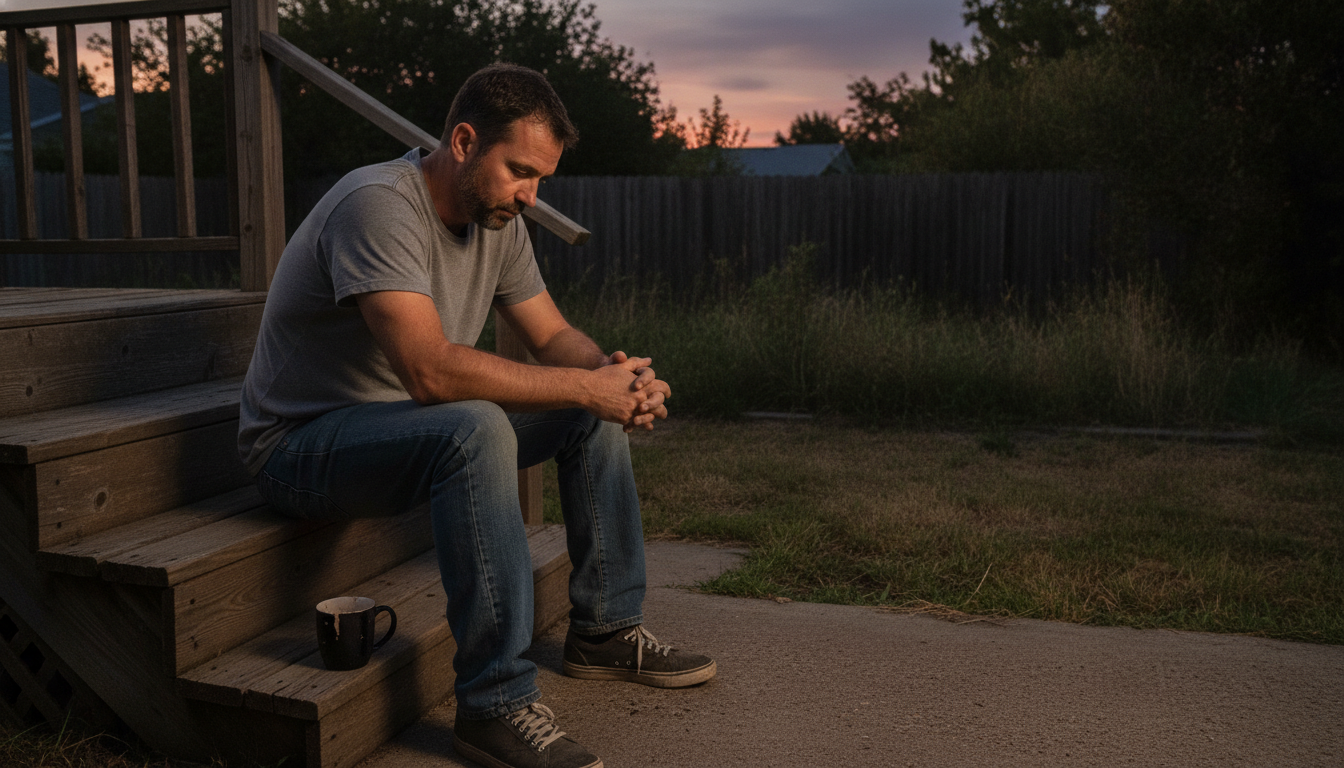
Anger management for dads is one of those topics that gets either completely ignored or dramatically overblown, and neither approach actually helps anyone. We are going to try a third option: talk about it honestly, look at what the research actually says, and skip the lecture entirely.
Because here is the thing. Nearly every dad we know has had a moment he is not proud of. Raised his voice when he did not mean to. Snapped at a kid over something genuinely small. Felt a flash of rage so fast and so hot that it scared him a little. That is not a character indictment. That is a nervous system responding to an impossible set of competing demands, and it deserves a real explanation, not a guilt spiral.
Why Dads Get Angry: The Actual Biology
The brain does not distinguish very well between a tiger and a toddler who has just dumped an entire bowl of cereal on the dog. The amygdala, the part of your brain responsible for threat detection and emotional reactivity, fires in roughly 200 milliseconds, which is significantly faster than your prefrontal cortex, the part that knows the cereal situation is not actually an emergency, can intercept the signal. You are not slow or weak. You are just working with hardware that was built for a different era.
Sleep deprivation makes this dramatically worse, and fathers of young children are chronically sleep deprived. Research published in Sleep found that even moderate sleep restriction significantly impairs emotional regulation and increases irritability and frustration tolerance problems (Dinges et al., 1997). If you are running on five or six hours and wondering why you are short-tempered, you now have a peer-reviewed explanation.
Add to that the broader context most dads are navigating: financial pressure, professional identity strain, relationship stress, the slow erosion of personal time, and the particular invisibility that a lot of fathers feel when they are doing a lot but not being seen for it. Anger is often the loudest symptom of a much quieter accumulation of stress. Understanding that does not excuse losing your cool, but it does reframe what is actually happening when you do.
What Losing Your Cool Actually Costs
We are not here to scare you, but we would be doing you a disservice if we skipped this part. The research on paternal anger and its effect on children is consistent and worth taking seriously. A longitudinal study found that children exposed to frequent parental anger and hostility showed elevated cortisol stress responses and increased rates of anxiety and behavioral problems over time (Sturge-Apple et al., 2012). Kids are not just emotionally affected in the moment. They are physiologically affected in ways that compound.
The relationship cost is real too. Repeated anger episodes erode the sense of safety that makes a parent-child relationship function. Kids start reading the room instead of just being in it. They become strategic about when to approach you, what to tell you, which version of dad is home right now. That kind of hypervigilance is exhausting for them and, honestly, it is painful to witness once you recognize it.
None of this is meant to make you feel terrible about yourself. It is meant to give you a clear-eyed reason to actually work on this, because vague guilt tends to produce avoidance, not change. Specific understanding tends to produce action.
The Window Before the Blow-Up
One of the most useful concepts in anger management for dads is what clinicians sometimes call the pre-escalation window. There is always a gap, however small, between trigger and eruption. In the early stages of learning emotional regulation, that gap might feel like a tenth of a second. With practice, it expands into something workable. Your job is not to eliminate anger. Your job is to get better at noticing the gap and using it.
The physical signals tend to come first and they are reliable: jaw tightening, shoulder tension rising, heat in the chest, a sudden drop in your ability to hear what is actually being said versus what you are interpreting. These are your early warning system. Most dads who do not have a practice of noticing these signals blow right past them and only recognize them in retrospect, after the eruption has already happened.
Building body awareness is not a spa-brochure concept. It is a practical skill that has a measurable effect on how quickly you can interrupt an anger response. Even five minutes of intentional breathing practice in the morning, not because it feels zen but because you are literally training your nervous system, creates a different baseline to work from during the day.
The Exit Is Not Retreat
One concrete and consistently effective strategy is the physical exit. When you feel the pre-escalation signals firing, you say something like “I need sixty seconds” and you remove yourself from the situation. This is not abandonment. This is not weakness. This is you recognizing that no useful parenting is going to happen in the next thirty seconds anyway, and that anything you say right now is more likely to damage than to help.
The key to making the exit work is coming back. You step away, you breathe, you lower your physiological activation, and then you return and deal with the actual situation. The exit without the return just teaches your kids that dad disappears when things get hard. The full loop, leave and come back, models exactly the kind of emotional regulation you are trying to help them develop.
Anger Management for Dads Who Do Not Want to Go to Therapy
We want to be straightforward about something. If your anger is frequent, severe, or leaving you or anyone in your house feeling unsafe, therapy is not optional. It is the right call and there is nothing soft about making it. A good therapist who works with men and fathers specifically can shorten the learning curve on this by years. If you are not there yet, we get it. Here are things that actually move the needle in the meantime.
Aerobic exercise is probably the most underrated anger management tool available. It metabolizes stress hormones, it resets your baseline mood, and it creates a neurochemical environment in which you are simply harder to rattle. We are not talking about training for an ultramarathon. Thirty minutes of elevated heart rate, four times a week, produces measurable changes in emotional reactivity. This is well documented and the barrier to entry is a pair of shoes.
Journaling lands differently for different people, but for dads who tend to intellectualize their anger rather than feel it, writing can be a useful bridge. Not journaling as in writing inspirational quotes to yourself. Journaling as in: what actually happened today, what did I feel, what did I tell myself in that moment, and was that story accurate? The act of reconstructing an anger episode in writing tends to surface patterns that are nearly invisible in real time.
Sleep is worth repeating here because it is not glamorous enough to get the attention it deserves. If you are consistently under seven hours, no anger management technique will perform at its ceiling. Sleep is the substrate everything else runs on. Protecting your sleep is not laziness. It is maintenance.
The Role of Unmet Needs
A lot of dad anger is not really about the kids at all. It is about exhaustion that nobody acknowledged, autonomy that got quietly taken away, a creative or physical self that has been sitting on the shelf for two years because there is no time. When we talk about why every dad needs a hobby or dedicated personal time, this is exactly the mechanism we are pointing at. Resentment is stored unexpressed need, and it tends to discharge sideways.
If you notice that your anger spikes in particular conditions, at the end of long weekends, on weeknights after a brutal work day, whenever you have gone more than a few days without any time to yourself, that is useful data. It means your anger is a signal worth decoding, not just a problem to suppress. Addressing the underlying need tends to reduce the frequency of eruptions more reliably than any in-the-moment technique.
We wrote more about the identity dynamics that drive a lot of this in our piece on the new dad identity crisis, and it is worth a read if you have not already, because the groundwork for a lot of dad anger gets laid in those first disorienting months of fatherhood and tends to go unexamined for years afterward.
After You Lose It: The Repair
You are going to lose it again. Not because you are a bad father but because you are a human one. The research on attachment and parenting is actually fairly reassuring on this point: it is not the absence of rupture that determines the health of a parent-child relationship. It is the quality and consistency of the repair that follows (Tronick & Cohn, 1989).
Repair does not mean performing remorse for an audience. It means going back to your kid, at a calm moment, and being honest at a level they can actually receive. For a six-year-old that might sound like: “I got really angry before and I yelled. That was not okay. You did not do anything wrong by being upset, and I am sorry.” For a twelve-year-old it might be a longer conversation. The point is ownership without melodrama, and a clear signal that the relationship is bigger than the episode.
One thing to avoid is the repair that is really about making yourself feel better. The apology that requires your kid to reassure you, or the big emotional gesture that puts the emotional weight back on them. A genuine repair is clean and brief and asks nothing of the child in return. It closes the loop for them, not for you.
Talking to Your Partner About It
If your anger is affecting the household, your partner already knows. They have probably been managing around it, adjusting the environment to reduce triggers, running interference with the kids, carrying the emotional weather forecast for the whole family. That is an exhausting role and it is worth naming out loud.
Having a direct conversation about what is happening, not in the heat of a moment but at a quiet point when everyone is regulated, tends to accomplish two things. It reduces the ambient tension that builds when a problem is sensed but not spoken. And it opens the door to practical collaboration: what does early warning look like in your house, what would be most helpful in the moment, what do the kids need to hear from both of you about emotions being normal and manageable.
This is also territory where the broader relationship health matters. If the relationship itself is under significant strain, anger tends to be one of the first places it surfaces. Our piece on date night ideas for parents on a budget is not the deep end of relationship repair, but tending to the connection between partners is a legitimate and underrated part of keeping the overall household emotional temperature down.
When to Get Help and What to Look For
There is a meaningful difference between anger that flares occasionally under real stress and anger that is frequent, disproportionate, or leaving anyone in your home feeling afraid. The first is a human experience that responds well to the tools above. The second is a clinical situation that requires professional support, and no amount of exercise or journaling substitutes for that.
If you are looking for a starting point, the American Psychological Association’s resources on anger management are solid and evidence-based. For men specifically, the SAMHSA resources on men’s mental health offer guidance on finding appropriate support without a lot of the framing that tends to make men avoid the conversation in the first place.
Cognitive Behavioral Therapy has the strongest evidence base for anger management specifically, and many therapists who work with men and fathers use it as a primary framework. If you are resistant to individual therapy, some men find group formats less daunting as a first step. The modality matters less than actually showing up somewhere.
The Longer Game
Anger management for dads is not a weekend project. It is a practice that evolves as your kids grow, as your life circumstances shift, and as you get better at reading your own internal weather. The goal is not to become someone who never feels anger. Anger is information. The goal is to become someone who processes that information without causing damage in the process.
The fathers who do this work tend to describe something interesting on the other side of it. Not just fewer blowups, but a closer relationship with their kids, because the kids stopped managing around them and started actually being with them. That shift, from a household that is organized around dad’s volatility to one where dad is genuinely safe to approach, is one of the more profound things a father can give his family. And it starts with exactly the kind of honest reckoning this article is asking you to have.
You already care enough to be reading this. That is not nothing. That is actually the most important variable in the whole equation.
References
Dinges, D. F., Pack, F., Williams, K., Gillen, K. A., Powell, J. W., Ott, G. E., Aptowicz, C., & Pack, A. I. (1997). Cumulative sleepiness, mood disturbance, and psychomotor vigilance performance decrements during a week of sleep restricted to 4–5 hours per night. Sleep, 20(4), 267–277. https://doi.org/10.1093/sleep/20.4.267
Sturge-Apple, M. L., Davies, P. T., Cicchetti, D., & Manning, L. G. (2012). Interparental violence, maternal emotional unavailability and children’s cortisol functioning in family contexts. Developmental Psychology, 48(1), 237–249. https://doi.org/10.1037/a0025419
Tronick, E. Z., & Cohn, J. F. (1989). Infant-mother face-to-face interaction: Age and gender differences in coordination and the occurrence of miscoordination. Child Development, 60(1), 85–92. https://doi.org/10.2307/1131074