Best Entry-Level Electric Guitars for Dads Getting Back Into Music
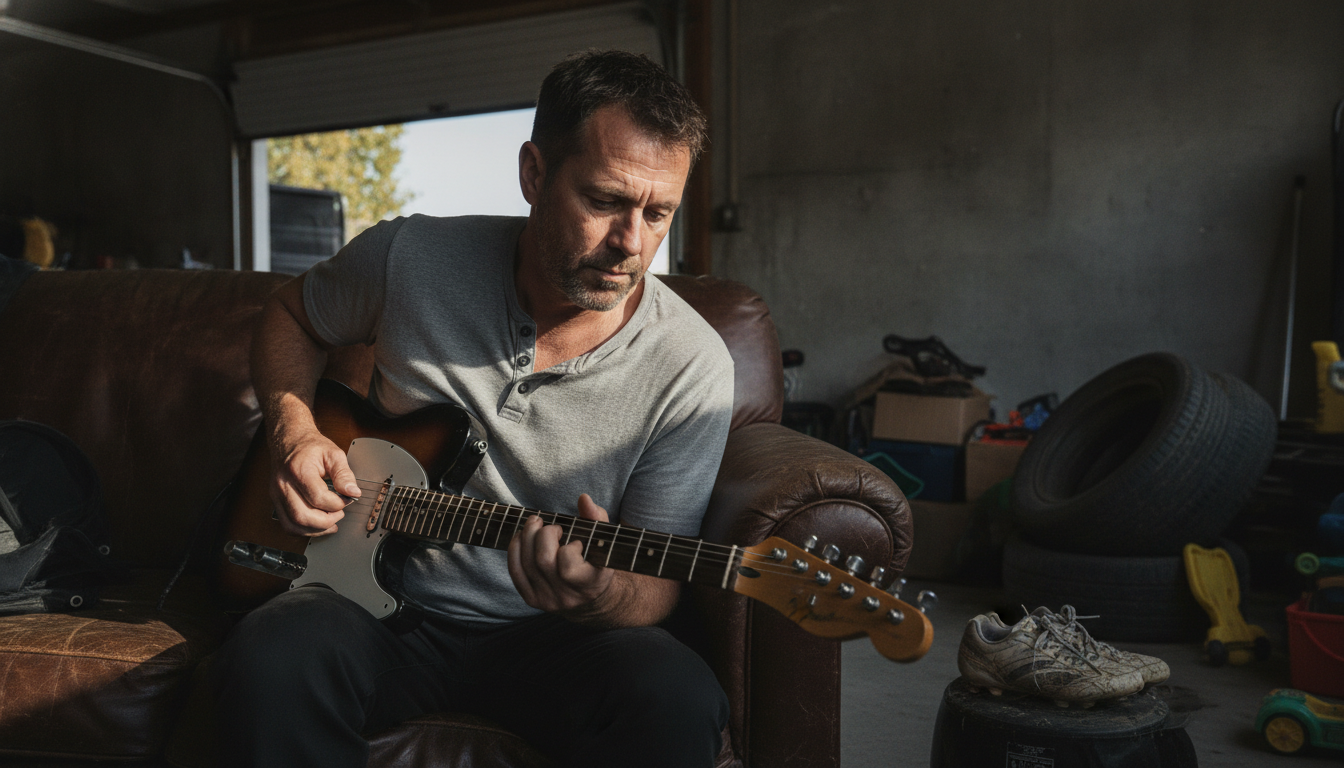
Disclosure: This article contains affiliate links. If you purchase through them, we may earn a small commission at no extra cost to you.
The Best Electric Guitar for Adults Returning to Music Is Not the One You Think
If you are searching for the best electric guitar for adults returning to the instrument after a ten or fifteen year gap, the market is simultaneously better and more confusing than it has ever been. Budget gear has improved dramatically. The $300 guitar of 2026 genuinely plays and sounds closer to a $600 guitar from fifteen years ago, and that matters when you are a dad trying to reclaim a piece of yourself without torching the family budget. We dug into specs, manufacturing reputations, player community consensus, and expert reviews to put together a list that actually makes sense for someone at your exact stage of life.
This is not a list for twelve-year-olds starting lessons or for collectors chasing vintage specifications. This is for the guy who played in a band in his twenties, whose Les Paul got sold during a lean year, and who now has forty-five uninterrupted minutes on Tuesday nights and a modest budget. We know that guy. We are that guy.
Why Returning Players Have Different Needs
A true beginner needs maximum forgiveness and simplicity. A returning adult player needs something different: an instrument that rewards the muscle memory that never fully left, sounds good enough to be motivating, and does not require a full setup from a luthier before it is playable. You remember what a good guitar feels like. A bad one will frustrate you off the couch faster than a toddler with a stomach bug.
You also have a real life now. There is no three-hour practice session. There is a window, and that window needs to be rewarding. Playability out of the box matters more for returning players than almost any other factor, which is why setup quality and fret finish dominate our evaluation criteria here. Tone comes second, because tone is subjective and adjustable. A guitar that makes your fingertips hurt or buzzes on the third fret is not adjustable without spending money you did not plan to spend.
What We Evaluated and How
Our picks are based on a combination of manufacturer specifications, independent setup and playability assessments from respected guitar reviewers, aggregate user feedback from communities like r/Guitar and The Gear Page, and the general expert consensus that has formed around these instruments over multiple product generations. We did not cherry-pick one glowing review. We looked for instruments that appear consistently across multiple credible best-of lists and that have earned sustained positive reputations rather than a flash of hype at launch.
Price ranges reflect retail as of July 6, 2026, and may shift. We focused on the $200 to $600 range because that is where the best electric guitar for adults returning genuinely lives. Below $200, quality control becomes a lottery. Above $600, you are moving into intermediate territory that requires more playing time to justify.
The Picks
1. Squier Classic Vibe 60s Stratocaster
Squier Classic Vibe 60s Stratocaster
The Classic Vibe series from Squier has been the gold standard entry-level recommendation for years, and for good reason. The 60s Stratocaster features an alnico magnet pickup set rather than the ceramic magnets found in cheaper builds, and that distinction is audible. The neck profile is a comfortable C shape, the fret ends are consistently reported as smooth from the factory, and the overall fit and finish punches well above its price bracket, which typically sits around $400 to $450.
For a returning player, the Stratocaster platform itself is familiar territory. The scale length, the feel of a single-coil pickup, the five-way selector, it all comes back fast. The Classic Vibe earns its reputation not through marketing but through years of sustained praise from players who expected little and got a lot. If you played a Strat in your past life, this is the most logical re-entry point on the market right now.
2. Epiphone Les Paul Standard 50s
Epiphone Les Paul Standard 50s
Epiphone has been Gibson’s more affordable imprint for over a century, but the current Standard 50s is a genuinely different animal compared to the Epiphones of even ten years ago. The ProBucker humbucking pickups are wound to tighter tolerances than previous generations, the Slim Taper D neck profile is widely praised for playability, and the weight, while still a full mahogany slab, is manageable for adult players who are not performing two-hour sets every night.
Retail hovers around $450 to $500, and what you get is a guitar that sounds convincingly close to guitars costing twice as much. If your musical identity in your twenties was built around hard rock, blues rock, or anything that called for thick humbucker tones, this is the best electric guitar for adults returning to that sound without the sticker shock of a real Gibson. The Les Paul Standard 50s is one of the most consistently recommended instruments in its category across player communities worldwide.
3. Yamaha Pacifica 112V
Yamaha’s quality control at every price point is genuinely exceptional, a reputation the company has built through disciplined manufacturing rather than clever branding. The Pacifica 112V is frequently cited by guitar teachers and independent reviewers as the best out-of-the-box playing experience under $400, and it has held that reputation for years without significant revision needed. The HSS pickup configuration gives you a humbucker in the bridge for thickness and two single coils for clarity, covering more sonic ground than a pure Strat or pure Les Paul copy.
For a dad who is not sure yet whether he wants to go full crunch or keep it cleaner, the versatility of the 112V is a real asset. The coil-tap on the bridge humbucker adds even more range. At around $330 to $380, it represents arguably the best value per dollar on this list, and Yamaha’s factory setup standards mean it almost always arrives ready to play rather than requiring immediate attention from a tech.
4. PRS SE Standard 24
PRS built its reputation on obsessive attention to fit and finish, and that philosophy has trickled into the SE line with more consistency than most brands manage at this price tier. The SE Standard 24 features a 25-inch scale length that sits between Fender’s 25.5 and Gibson’s 24.75, making it genuinely comfortable for players whose hands have changed slightly since their twenties. The wide-fat neck profile and well-dressed fret ends are frequently highlighted in setup reviews.
It runs around $500, putting it at the top of our range, but the construction quality justifies the position. The bird inlays are subtle and genuinely handsome rather than gaudy. If you want something that feels like a step above a starter guitar immediately, and that you will not feel compelled to upgrade away from after six months of consistent playing, the SE Standard 24 is the best electric guitar for adults returning who want to invest once and stay there for a while.
5. Squier Classic Vibe 70s Telecaster
Squier Classic Vibe 70s Telecaster
The Telecaster is perhaps the most no-nonsense electric guitar platform ever designed. Two pickups, a three-way switch, one volume, one tone, a bolt-on neck, and a bridge that has been basically unchanged since 1950. The 70s variant in the Classic Vibe line adds a wider headstock profile and an ash body that contributes to a slightly snappier top end than alder-bodied alternatives. For returning players who leaned toward country, classic rock, or any kind of twangy alternative territory, this is the platform that makes the most sense.
At around $400, it carries the same build quality standards as its Stratocaster sibling and benefits from the same alnico pickup upgrade over cheaper Squier lines. The Telecaster’s simplicity is a feature, not a limitation. There is nothing to confuse, nothing to accidentally knock out of position, and nothing between you and making noise. For a dad with limited practice windows, that directness has real value.
6. Harley Benton SC-450 Plus
This one requires a footnote. Harley Benton is a Thomann house brand, which means ordering from Europe and accepting that you are buying outside the major retail ecosystem. We include it because the European guitar community has spent years validating these instruments at a level that is hard to ignore. The SC-450 Plus is a Les Paul-style guitar that consistently receives praise for fret work and hardware quality that would cost significantly more from a name-brand manufacturer, typically coming in around $250 to $300.
If you are comfortable with the import process and want to maximize your budget, this is the outlier pick that serious players on tight budgets keep recommending to each other. It is not for everyone. But it is genuinely good, and pretending it does not exist because it does not have a major retail presence would be doing you a disservice.
7. Fender Player Series Stratocaster
Fender Player Series Stratocaster
At the top end of this list sits the actual Fender headstock, made in Mexico at Fender’s Ensenada facility, which has a long and well-documented track record for consistent quality. The Player Series runs around $550 to $600 and represents the point where you are buying a Fender, not a Fender-adjacent. The Player pickups are voiced with slightly more output than vintage-spec equivalents, which suits returning players who want to plug into a decent practice amp and feel something.
If budget allows and you previously owned an American Fender that you have been quietly mourning ever since, the Player Series is the best electric guitar for adults returning who want to feel like they are back where they belong without paying American series prices. It is a real guitar with a real Fender neck, and the gap between it and an American Professional has closed considerably over the last decade of manufacturing improvements in Ensenada.
What About an Amp?
A great guitar through a bad amp sounds bad. This is not an opinion, it is physics. You do not need to spend a lot, but you need to spend something. The Fender Frontman and its equivalents have given beginner amps a bad reputation for a generation. The good news is that modeling amps have improved the entry-level amp market the same way budget manufacturing improvements have changed entry-level guitars.
The Boss Katana 50 MkII and the Fender Mustang Micro are both widely praised for delivering genuinely usable tones at low volumes, which matters enormously when your kid is asleep twenty feet away. Boss Katana 50 MkII Fender Mustang Micro For a full breakdown of practice amp options, Fender’s own tone resources and Premier Guitar’s amp reviews are worth your time.
Setup Matters More Than the Guitar
This is the piece of advice that experienced players give returning players and that the marketing ecosystem completely ignores because there is less money in it. Every guitar in this price range can benefit from a basic professional setup: action adjusted, intonation checked, nut slots cleaned, truss rod dialed in. A $60 to $80 setup from a competent local tech can transform a decent guitar into a genuinely great-feeling one.
If you have not played in fifteen years and you pick up a factory guitar with high action and sharp fret ends, you will blame yourself for feeling rusty when the instrument is actually working against you. Ask your local guitar shop about their setup rates before you buy, and budget for it. It is the single most effective upgrade you can make to any of the guitars on this list.
The Bigger Picture
Getting back into music as an adult is one of those things that sounds simple and is actually slightly complicated by the life you have built. Time is rationed. Energy is rationed. The instrument you choose should remove friction, not add it. That is the whole thesis of this list: find something that plays well, sounds good enough to be motivating, and costs enough to be taken seriously but not so much that it creates household tension.
We have written before about why reclaiming a creative practice matters for dads specifically. If you want the context behind why picking the guitar back up is worth the effort in the first place, our piece on why every dad needs a hobby covers the psychological and relational case in full. And if you are navigating the broader identity shift that comes with being a dad who used to be someone who played guitar, the new dad identity crisis is worth a read too.
The best electric guitar for adults returning is ultimately the one that makes you want to pick it up during that forty-five minute Tuesday window instead of scrolling your phone. Every guitar on this list is capable of being that guitar. The differences between them come down to your sonic history, your body mechanics, and your honest budget. Pick the one that fits those three variables and you will be fine. The muscle memory is still in there. It just needs a reason to come back out.
Quick Reference
Under $400: Yamaha Pacifica 112V, Harley Benton SC-450 Plus
$400 to $500: Squier Classic Vibe 60s Stratocaster, Squier Classic Vibe 70s Telecaster, Epiphone Les Paul Standard 50s
$500 to $600: PRS SE Standard 24, Fender Player Series Stratocaster
Best all-rounder: Yamaha Pacifica 112V
Best for former Les Paul players: Epiphone Les Paul Standard 50s
Best for former Strat players: Squier Classic Vibe 60s Stratocaster
Best if budget is the priority: Harley Benton SC-450 Plus
Best one-and-done purchase: Fender Player Series Stratocaster