How to Introduce Your Kids to Rock Music Without Forcing It
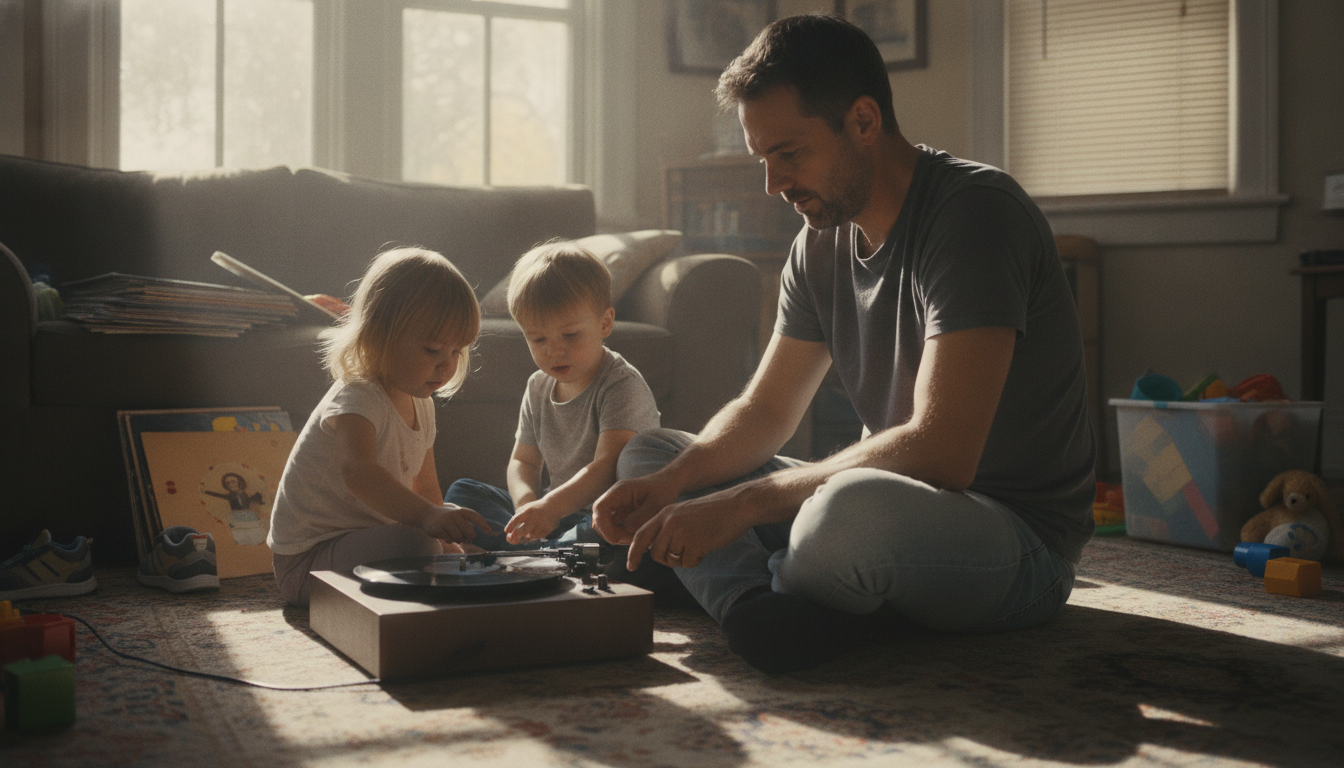
Introducing kids to rock music is one of those things that sounds straightforward until you actually try it and watch your seven-year-old loudly request the Bluey theme song approximately four seconds into “Whole Lotta Love.” We have been there. The instinct is to double down, to make the case, to explain why this riff matters. That instinct is almost always wrong.
The good news is that introducing kids to rock music does not require a curriculum, a playlist lecture series, or any of the well-meaning but deeply exhausting effort that tends to backfire. What it requires is patience, a little strategy, and the willingness to let your kid arrive at the music on their own terms. Here is what has actually worked, based on how kids process new sensory experiences and how music preference actually develops.
Why Forcing It Always Loses
Kids are wired to resist things that feel like assignments. The moment you sit a child down with the energy of “pay attention, this is important,” you have already lost them. Music is no different from food or sports or books in this regard: the harder you push, the faster they run in the opposite direction.
What actually shapes a child’s taste over time is repeated, low-pressure exposure in contexts they already enjoy. The music becomes part of the texture of their life rather than a thing being sold to them. That distinction is everything. Sharing music with children is less about the music itself and more about the environment surrounding it.
Start With the Physical Experience
Rock music has a physical dimension that most other genres do not lean into as hard. The kick drum hits differently in your chest. A power chord through a real amp moves air in a way a Bluetooth speaker at half volume simply cannot replicate. Before your kid can appreciate a song structurally, they can feel it in their body, and that is the door you want to open first.
If you play guitar, plug into an amp and let them stand close. Let them strum it themselves. If you have a decent stereo, put on something with real low-end dynamics and turn it up to a volume you would normally reserve for when they are at school. The physical experience of rock music is one of its greatest selling points, and kids respond to it before they have the vocabulary to explain why.
Let the Car Do the Work
The car is the single most underrated venue for introducing kids to rock music. They are captive, they are usually already in a decent mood, and the setting carries zero academic pressure. Nobody is asking them to have an opinion. The music is just there, the same way the road noise is there.
The move here is not to announce what you are playing or why it is significant. Just put it on. Over weeks and months, the songs become familiar. Familiarity is the first cousin of affection when it comes to music preference. The song they groaned at in September becomes the one they ask about by December, and they will have no memory of ever groaning at it.
Pick Your Entry Points Carefully
Not all rock is a reasonable entry point for a nine-year-old who has been raised on pop radio. Dropping them into the deep end of your taste is a choice, and it is usually the wrong one. The better approach is to find the music that lives at the intersection of what you love and what they can actually grab onto.
Songs with big, memorable melodic hooks tend to travel well across ages. Think early AC/DC, the more anthemic end of Foo Fighters, classic Zeppelin tracks built around a central riff rather than extended improvisation. The goal at this stage is not to make them fans of your favorite band. It is to make rock music feel welcoming rather than foreign. You can get into the deep cuts once there is a foothold.
Songs That Tend to Land With Kids
A few that come up consistently when parents talk about sharing music with children in rock contexts: “Highway to Hell” by AC/DC (the chorus does half the work for you), “Learn to Fly” by Foo Fighters, “Seven Nation Army” by The White Stripes, and virtually anything from the first two Weezer records. These tracks have repetition, energy, and hooks that do not require any prior rock literacy to enjoy.
“Seven Nation Army” in particular is worth noting because that bass line has become genuinely cross-cultural at this point. If your kid has ever been to a sporting event, they have heard it chanted in a stadium. That kind of ambient cultural contact is a gift: the song already feels like something they know, which makes it a natural bridge.
Make It a Shared Discovery, Not a Lecture
One of the most effective things you can do when sharing music with children is to frame yourself as a fellow fan rather than an authority. Instead of “this is a classic, you need to know this song,” try “I’ve been obsessed with this lately, want to hear it?” The difference in how that lands is significant. One version positions them as a student. The other invites them into something you are genuinely excited about, which is a much easier yes.
Even better, let them catch you listening for yourself, without making it a moment. A kid who walks into the kitchen and finds their dad nodding along to something while making dinner has a fundamentally different relationship to that music than a kid who was sat down and asked to appreciate it. Authenticity is the whole game here.
Follow Their Curiosity Wherever It Goes
Here is the part most rock dads underestimate: if your kid gets curious about music at all, even in a direction that has nothing to do with what you love, that curiosity is the asset. A kid who wants to learn more about how music works, who asks why a song sounds the way it does, who wants to try an instrument, is already developing the listening habits that will eventually bring them to the stuff you care about.
We have written before about why hobbies matter for dads, and the same logic applies to kids: intrinsic motivation is the only kind that produces lasting engagement. If your kid discovers they love playing drums because of a pop song, they are now a kid who plays drums. That is a kid who will eventually find their way to Bonham and Moon on their own, because the instrument itself will lead them there.
Take Them to Live Music When You Can
Recorded music and live music are genuinely different experiences, and for a lot of people, live music is the one that flips the switch. There are all-ages shows worth seeking out, local festivals, smaller club nights that accommodate younger audiences, and outdoor concerts where the stakes of a kid having a moment of being overwhelmed are low. A child who sees a live band playing real instruments in front of a real crowd has witnessed something that streaming cannot replicate.
The volume can be legitimately loud for small ears, so bring hearing protection and make sure they are comfortable with the option to step back if it is too much. The goal is not to endure the show, it is for them to feel the energy of it. Even thirty minutes at a festival stage can be enough to plant something that grows for years.
Let Them Have Bad Taste Without Commentary
This one is genuinely hard. Your kid is going to go through phases of loving things that make you quietly question your entire parenting project. The correct response to “can we listen to [whatever the 2026 equivalent of a content creator’s merchandising song is] again” is not a monologue about production values or artistic integrity. It is to put it on and wait.
Musical taste is not fixed at age ten. Introducing kids to rock music is a long game, measured in years of low-pressure exposure rather than weeks of deliberate programming. The kids who grow up in houses where music is playing, where parents have genuine enthusiasms they express without performing them for an audience, where discovery is treated as inherently fun rather than academically important, those are the kids who develop rich and lasting relationships with music. The specific genre is almost secondary to the overall culture you build around it.
If you are navigating the broader identity questions that come with fatherhood and trying to figure out which parts of your old self travel into this new life, our piece on the new dad identity crisis is worth a read. Your relationship to music is one of the most personal parts of who you were before kids, and sharing it honestly, without needing it to land perfectly, is one of the more meaningful things you can do.
The Bottom Line
Introducing kids to rock music is not a project with a finish line. It is a posture, sustained over time, that says the music you love is part of your actual life and they are welcome to be part of it. Some kids will meet you there at eight. Some will get there at sixteen. Some will take a hard left into jazz or electronic music and circle back to your record collection when they are thirty. All of those outcomes are fine.
What is not fine is making it a thing, turning sharing music with children into a structured exercise in taste-building that carries parental expectation like a weight. Keep it loose. Keep it honest. Turn it up when a good song comes on. That is genuinely all it takes.