Why Every Family Needs a Dance Party Playlist (And How to Build One)
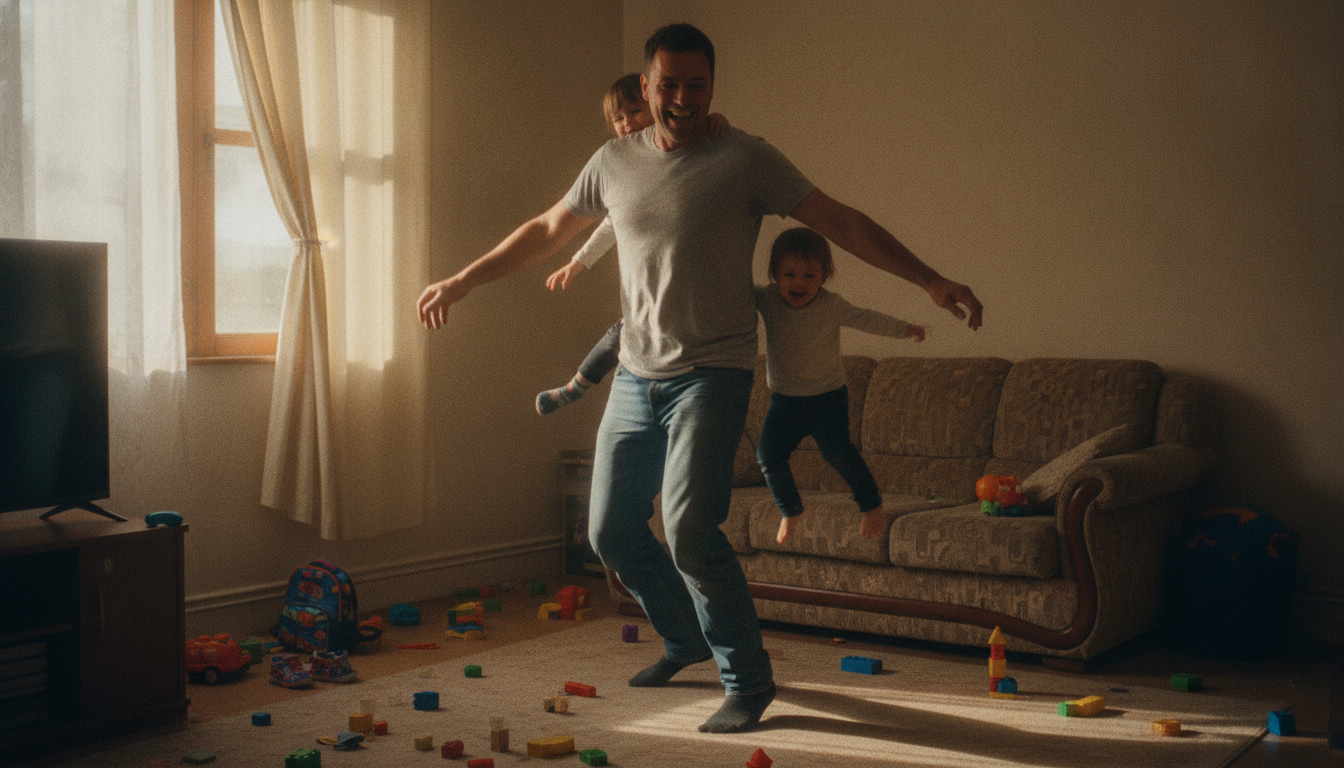
A solid family dance party playlist is one of those household tools that sounds ridiculous until you actually have one ready to go. We are talking about a curated, intentional, genuinely fun sequence of songs that can transform a Tuesday night meltdown or a Saturday morning in pajamas into something everyone remembers. And we mean everyone, not just the kids bouncing off the walls, but you and your partner too.
This is not about finding the least annoying children’s music and tolerating it. That is a low bar and your family deserves better. A great family dance party playlist pulls from real music across genres and decades, finds the overlap between what kids respond to and what adults can actually enjoy, and builds enough momentum to carry a room. It is a skill, and like most skills, there is a method to it.
Why This Actually Matters
Music and movement together are not just fun, they are functional. Shared physical play and spontaneous dance have been consistently linked to stronger family bonding and improved mood regulation in children. When you build a family dance party playlist with some thought behind it, you are not just killing time between dinner and bath. You are creating a ritual, and rituals are the connective tissue of family life.
There is also the question of musical literacy. Kids who grow up hearing a wide range of music, real rhythm, real melody, real dynamics, develop a more sophisticated relationship with sound over time. Dropping a Talking Heads track next to a Lizzo banger next to a classic Stevie Wonder cut is doing more for your kid’s ears than any music class app on an iPad. We are not overstating this. Exposure is the curriculum.
The Architecture of a Good Family Dance Party Playlist
A playlist is not just a list of songs. It has structure. Think of it the way a DJ thinks about a set or the way we think about a setlist before a show. There is an arc, an energy curve, a beginning that invites people in and a middle that holds them. The best family dance party playlist follows a similar logic, adjusted for the fact that your audience includes a seven-year-old who will absolutely quit if the vibe dips.
Start With a Hook, Not a Banger
The opening song should be familiar and immediately engaging, but not so intense that it peaks before anyone has left the kitchen. Think about songs with a strong groove that builds, something with a memorable intro that gets heads nodding before the first chorus. Pharrell’s “Happy” gets mocked for being overplayed, but there is a reason it works as an opener: the tempo is right, the energy is inviting, and even a toddler will move to it. “Can’t Stop the Feeling” by Justin Timberlake operates in the same zone.
The goal of the first two or three tracks is buy-in. You want every person in the room to decide, consciously or not, that they are participating. Once that happens, you have much more latitude in the middle of the playlist to take some swings.
Build Through the Middle
The middle section of your family dance party playlist is where you put the music you actually love. This is where Bowie lives. This is where you sneak in “September” by Earth, Wind and Fire, which is arguably a perfect song and will make your kids love the 70s without knowing why. This is where you can throw a curveball, a classic rock track with a heavy groove, a funk cut with a bass line that hits low, or something from whatever genre you have been obsessing over lately.
Kids follow energy more than genre. If you are genuinely into it, they will follow. If you are half-heartedly swaying to something you do not actually like, they will clock that too. The middle of a great family dance party playlist is a gift to yourself disguised as a family activity, and that is exactly how it should be. If you want to think more about why parents need to protect the things they actually love, we wrote about that in our piece on why every dad needs a hobby.
Burn It Down at the End
The closing section should hit peak energy before a deliberate cooldown. Think two or three high tempo songs that demand full commitment, then one slow or medium track that signals the wind-down without killing the mood. “Shake It Off” and “Uptown Funk” earn their spots here. Then something like Vance Joy’s “Riptide” or a slower Motown track brings the room back to earth in a way that feels earned rather than abrupt.
The cooldown matters for kids especially. Hard stops after high energy are neurologically rough on younger children. A gradual deceleration built into the playlist does the parenting work for you, and that is the kind of efficiency we respect deeply around here.
Building Your Family Dance Party Playlist: Practical Moves
Shoot for 90 Minutes, No More
The ideal family dance party playlist runs somewhere between 60 and 90 minutes. That is enough to feel like an event without becoming a slog. At about 20 songs at an average of four minutes each, you have a complete arc with room for a few shorter tracks to pick up tempo. Keep it tight. An overlong playlist loses its shape the same way an overlong movie loses the plot.
Use Streaming Tools, But Do Not Outsource the Curation
Spotify, Apple Music, and Tidal all offer family or kids playlists and they are fine as a starting point. Spotify has written publicly about how its recommendation algorithms work, and understanding that context is useful because it helps you see why algorithmic playlists tend to cluster toward the safe and familiar. They optimize for low skip rates, not for musical adventure or the specific chemistry of your household. Use the algorithm as a suggestion box, then override it constantly.
Pull songs from your own history too. What were you listening to when you were 16? Some of it is genuinely great music that your kids have never heard. Some of it will make your partner laugh in a good way. That shared history embedded in a family dance party playlist turns it into something more than background noise.
Let the Kids Contribute, With Editorial Oversight
Give kids a number of slots to fill, something like three to five picks depending on their age, and let them choose whatever they want within a loose filter of your choosing. This is genuinely important because ownership drives engagement. A kid who picked one of the songs is a kid who is dancing when that song comes on. Research published in the Journal of Personality and Social Psychology has consistently shown that autonomy support, giving children meaningful choices within structure, increases intrinsic motivation and positive affect. A dance playlist is a low stakes, high return place to practice that.
Editorial oversight just means you reserve the right to veto anything with a runtime over six minutes or anything that is genuinely unlistenable. House rules.
A Few Genre Anchors Worth Building Around
Every strong family dance party playlist benefits from a few genre anchors that provide contrast and keep the energy from flattening. Motown and classic soul are almost universally accessible and rhythmically undeniable. 80s pop has a nostalgia pull for parents and a campy fun factor for kids. Current pop is important for relevance, especially with older kids who will otherwise see the whole exercise as a parental cringe event. And at least one or two rock tracks with a genuine groove, think “Twist and Shout,” “Jumpin’ Jack Flash,” or something from the Foo Fighters catalog, give the playlist some edge and remind everyone that music is supposed to have some voltage to it.
Latin pop and Afrobeats are worth including not just for rhythmic variety but because the cross-cultural exposure is genuinely valuable. Bad Bunny, Burna Boy, and Shakira have all produced songs that hit hard on a dance floor regardless of whether you understand every word. Music cognition researchers have noted for years that rhythm response is one of the most cross-culturally consistent human behaviors. Your family’s ears are already wired for this. You just have to give them the material.
Make It a Ritual, Not a Random Occurrence
The families who get the most out of a family dance party playlist are the ones who make it a recurring thing. Friday nights before dinner. Sunday mornings before anyone has fully woken up. The specific timing matters less than the consistency. When kids know it is coming, they look forward to it. When they look forward to it, they participate more fully. And when everyone is fully in, even a living room with a Bluetooth speaker and some cleared floor space feels like something worth showing up for.
This kind of low-overhead family ritual is exactly what we talk about in our piece on surviving the first year of fatherhood, because the habits you build early set the tone for a long time. A dance party is not a small thing dressed up as entertainment. It is one of the ways a family learns to be together, and it costs nothing but a little intentional curation. Go build the playlist.