Sleep Deprivation and Performance: What the Research Says About Running on Empty
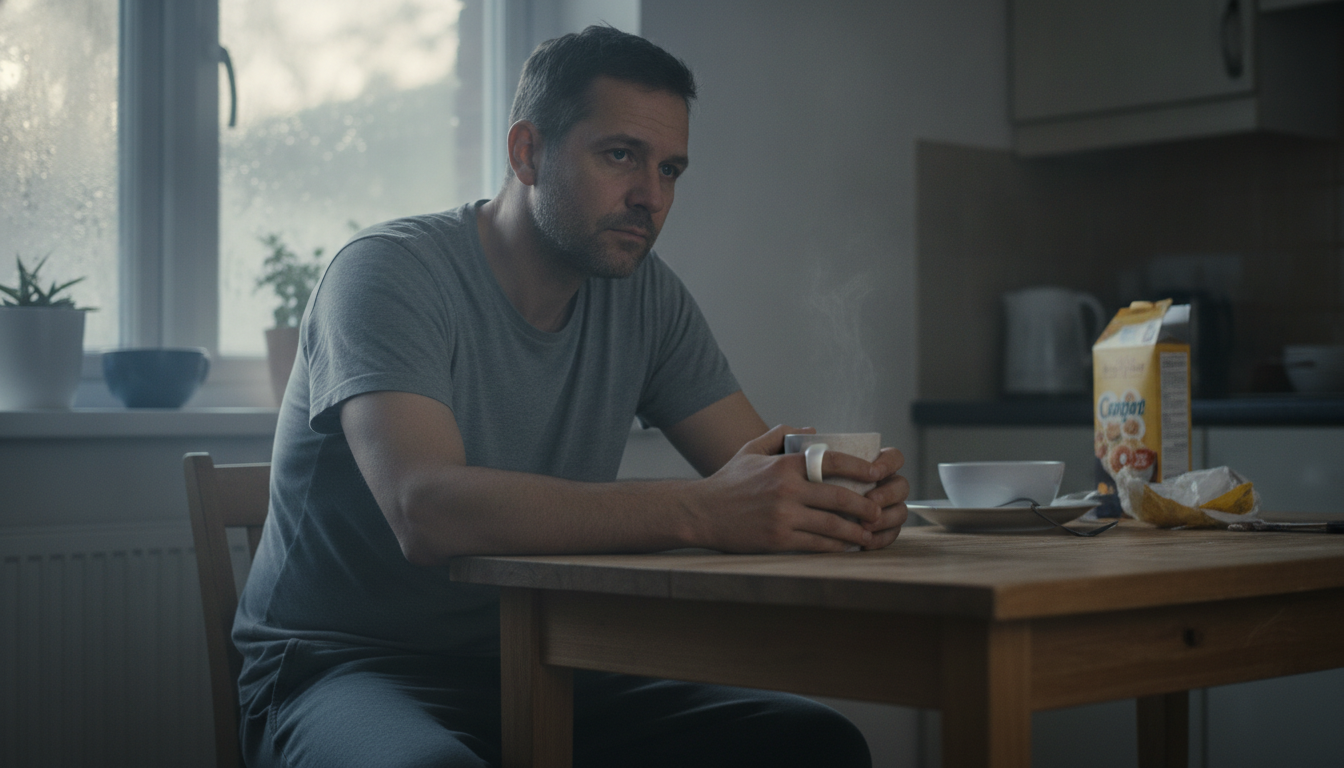
What Sleep Deprivation Actually Does to Your Body and Brain
The sleep deprivation effects parents experience are not just a badge of honor or a punchline at a birthday party. They are a measurable, physiological cascade that touches nearly every system in the human body, and the research on this is about as unambiguous as science gets. If you are a new parent right now, running on four fractured hours and three cups of coffee, this article is not going to tell you to practice better sleep hygiene as if that thought had never crossed your mind. What it is going to do is give you a clear, honest picture of what is happening inside you, why it matters, and what interventions actually have evidence behind them.
Understanding the sleep deprivation effects parents face starts with understanding what sleep actually does. Sleep is not passive recovery. It is an active biological process during which the brain consolidates memory, the body regulates hormones, the immune system does its maintenance work, and the glymphatic system clears out metabolic waste from neural tissue. Shortchange that process night after night, and the consequences compound faster than most people expect.
The Cognitive Tax Is Steeper Than You Think
One of the most well-replicated findings in sleep science is that sleep-deprived individuals consistently underestimate how impaired they actually are. A landmark study by Van Dongen et al. (2003) found that subjects restricted to six hours of sleep per night for two weeks showed cognitive deficits equivalent to two full nights of total sleep deprivation, and critically, those subjects reported feeling only slightly sleepy. The subjective sense of “I’m managing fine” does not track with objective performance decline. That gap between how impaired you are and how impaired you feel you are is one of the more dangerous features of chronic sleep loss.
What does that impairment look like in practice? Slower reaction times, reduced working memory, impaired decision making, and a measurable drop in the ability to regulate emotional responses. For a new parent, this plays out in ways that are not abstract at all. It is the moment you snap at your partner over something trivial, the afternoon you cannot remember whether you gave the baby their vitamin D drops, or the drive to the pediatrician where you run a stop sign because your vigilance has simply gone offline. These are not character flaws. They are neurological consequences.
The Emotional Regulation Problem Nobody Talks About
Sleep loss has an outsized effect on the amygdala, the brain region that processes threat and emotional intensity. Research by Yoo et al. (2007) published in Current Biology found that sleep-deprived participants showed approximately 60 percent greater amygdala reactivity to emotionally negative stimuli compared to well-rested controls, with a functional disconnection between the amygdala and the prefrontal cortex, the region responsible for putting the brakes on emotional responses. In plain language, when you are severely sleep deprived, your brain’s alarm system gets louder while the part that regulates it goes quiet.
For parents, this matters enormously. The early months of parenthood are already emotionally demanding in ways that have no real precedent in adult life. Layering a compromised emotional regulation system on top of that stress is a combination that puts relationships, mental health, and parenting quality under genuine pressure. If you have found yourself feeling irrationally irritable or emotionally raw in ways that do not feel like you, that is not a personal failing. That is your prefrontal cortex asking for a nap.
What Happens to Your Body When Sleep Deprivation Drags On
The cognitive and emotional effects get most of the attention, but the physiological consequences of chronic sleep loss are equally serious. Testosterone production, which occurs primarily during sleep, takes a significant hit with sustained restriction. Growth hormone secretion follows a similar pattern. Cortisol, the primary stress hormone, becomes chronically elevated. Insulin sensitivity decreases, which means even a healthy diet becomes less metabolically efficient when sleep is poor. The immune system’s ability to mount responses to pathogens is reduced, which is part of why new parents seem to catch every cold that passes within fifteen feet of them.
There is also an appetite regulation component that is underappreciated. Sleep deprivation disrupts the balance between ghrelin, the hormone that signals hunger, and leptin, the hormone that signals satiety. The result is increased appetite, stronger cravings for calorie-dense foods, and a reduced ability to feel full. This is not a willpower issue. It is a hormonal one, and it is worth knowing about when you are trying to figure out why your nutrition feels completely off the rails since the baby arrived.
The Long Game: Why the First Year Sets a Trajectory
Most discussions of new parent sleep loss treat it as a temporary inconvenience you just endure and then bounce back from. The reality is a little more complicated. While the body does have genuine recovery capacity, the first year of parenthood often involves a level of sleep restriction that does not simply disappear when the baby starts sleeping through the night, because by that point a second child may be arriving, or the demands of work have compounded, or the sleep habits formed under duress have become entrenched. We have written before about the broader identity adjustment that happens in early fatherhood, and the physiological dimension of that shift deserves its own honest accounting. For a deeper look at what the first year actually costs a new dad, our piece on surviving the first year of fatherhood covers the territory from multiple angles.
There is also an important distinction between acute sleep deprivation and chronic sleep restriction. Losing one night is acutely brutal but relatively recoverable. Losing ninety minutes a night for six months produces a cumulative debt that cannot be resolved with a single long weekend of sleeping in. The research suggests that cognitive recovery from extended chronic restriction takes longer than most people assume, and some performance domains may not return to baseline as quickly as others.
New Parent Sleep Tips That Are Actually Grounded in Evidence
Here is where we shift from what is happening to what can actually help. We are not going to tell you to buy blackout curtains and meditate. Some of the new parent sleep tips that circulate on social media are either obvious to the point of insult or not well-supported by evidence. What follows is a tighter list drawn from what the research and expert consensus actually back.
Tip One: Prioritize Sleep Architecture Over Total Hours
When total sleep hours are constrained, the quality and structure of the sleep you do get becomes the main lever you have. Slow-wave sleep and REM sleep are not distributed evenly across the night. The deepest slow-wave sleep tends to cluster in the first half of the night, while REM sleep becomes more prominent in the second half. If you are getting a fragmented four to five hours, you are likely capturing more slow-wave than REM, which has implications for physical recovery versus memory and emotional processing. Understanding this helps you make strategic decisions about when you sleep rather than just trying to grab whatever windows exist.
One practical implication is that anchoring a consistent first sleep block, even a shorter one, at a reliable time rather than staying up late and then sleeping in fragments, can preserve more of that early slow-wave architecture. It also helps stabilize your circadian rhythm, which takes its own hit under new parent conditions.
Tip Two: The Strategic Nap Is a Legitimate Tool
The “sleep when the baby sleeps” advice gets mocked because it collides with the reality of having dishes, laundry, and approximately forty-seven other tasks waiting. But there is genuine neuroscience behind short naps as a partial mitigation strategy. Research published in Sleep has demonstrated that a ten to twenty minute nap can produce meaningful recovery in vigilance and cognitive performance without producing significant sleep inertia, the groggy impaired feeling that comes from waking during deeper sleep stages. Naps exceeding thirty minutes risk entering slow-wave sleep, which makes waking harder and grogginess worse.
The practical version of this is a targeted fifteen minute nap taken when a genuine window opens, not as a guilty indulgence but as a deliberate performance tool. Setting an alarm at twenty minutes protects against overshooting. Some people find a small amount of caffeine consumed immediately before the nap, the so-called coffee nap, improves post-nap alertness because the caffeine begins blocking adenosine receptors right around the time they wake up. The evidence on this specific technique is modest but interesting, and it has a low cost to try.
Tip Three: Manage Light Exposure Deliberately
Light is the primary input the brain uses to set and maintain circadian rhythm. When you are up at 2 a.m., 4 a.m., and 5:30 a.m. for feeds, your light environment during those wakings matters. Bright overhead lights and phone screens during nighttime wakings send morning signals to your circadian system, making it harder to fall back asleep and compressing the sleep opportunity that remains. Using dim, warm-toned light for nighttime feeds and keeping phone interaction minimal during those windows is a low-cost adjustment that can meaningfully improve sleep quality in the hours that follow.
On the other side of the equation, getting bright light exposure in the morning, ideally natural sunlight within the first thirty to sixty minutes of waking, helps anchor your circadian anchor point and improves the quality of sleep pressure buildup across the day. This is one area where the evidence is genuinely strong and the intervention costs nothing.
Tip Four: Coordinate Sleep Shifts With Your Partner
The couples who navigate new parent sleep deprivation most effectively are generally the ones who treat it as a logistics problem to be solved together rather than a suffering competition to be endured in parallel. Research on postpartum sleep consistently shows that equitable division of nighttime responsibilities is associated with better outcomes for both partners in terms of mood, relationship satisfaction, and parenting responsiveness. This does not always mean a perfectly even split, particularly if one partner is breastfeeding, but it does mean a deliberate structure rather than whoever wakes up first losing by default.
One model that has evidence behind it is the protected sleep block approach, where each partner is guaranteed one uninterrupted four to five hour block per night and takes sole responsibility for nighttime care during the other’s block. This structure preserves at least one partial sleep cycle for each parent and has been shown to improve both sleep quality metrics and daytime functioning better than both parents being equally available and equally fragmented all night.
What Does Not Work, Despite Being Everywhere
Alcohol as a sleep aid is worth addressing directly because it is genuinely common among exhausted parents who find that a drink or two helps them fall asleep faster. Alcohol does accelerate sleep onset, but it suppresses REM sleep in the first half of the night and causes rebound wakefulness in the second half as it metabolizes. The net effect on sleep quality is negative, and the research on this is consistent. If you are already sleep deprived, trading REM time for faster sleep onset is not a good deal.
Excessive caffeine, particularly consumed after early afternoon, is another common coping mechanism that creates a feedback loop. Caffeine has a half-life of approximately five to seven hours in most adults, meaning a 3 p.m. coffee still has a meaningful amount of caffeine active in your system at 10 p.m. This delays sleep onset and reduces slow-wave sleep, compounding the deficit it was used to address. Cutting caffeine off at noon or 1 p.m. is an uncomfortable adjustment for a few days but tends to improve sleep quality noticeably within a week.
When Sleep Deprivation Becomes a Mental Health Issue
This is the part that does not get enough airtime in conversations aimed at new dads specifically. Paternal postpartum depression is real, it is underdiagnosed, and chronic sleep deprivation is both a symptom and an amplifier. The sleep deprivation effects parents experience are not purely physical, and when persistent exhaustion starts manifesting as persistent low mood, emotional numbness, withdrawal from your partner or your baby, or a sense that you are simply going through the motions, those are signals worth taking seriously. The National Institute of Mental Health’s resources on depression and the Postpartum Support International resources specifically for dads are good starting points for understanding where exhaustion ends and something that warrants clinical attention begins.
We have touched on the identity dimension of this before, and it connects here in an important way. The new dad identity crisis is real, it runs alongside the physical demands of the early months, and sleep deprivation makes the psychological processing work of that transition significantly harder. If you are not sure where you land on that spectrum, our piece on the new dad identity crisis is worth a read alongside this one.
The Bottom Line
The sleep deprivation effects parents face in the early years are serious, they are physiologically real, and they are not resolved by toughening up or drinking more coffee. The research is clear that cognitive performance, emotional regulation, physical health, and relationship quality all take measurable hits under sustained sleep restriction. The good news is that some of that impact can be mitigated with deliberate strategy rather than just more endurance. Protect your sleep architecture where you can, use naps as a tool rather than a luxury, manage your light environment, coordinate with your partner as a team, and pay attention to the signals that suggest the sleep problem has become something else entirely.
Nobody is getting through this season fully intact. The goal is not perfection. It is knowing what is actually happening so you can make better choices inside genuinely difficult constraints.
References
Van Dongen, H. P. A., Maislin, G., Mullington, J. M., & Dinges, D. F. (2003). The cumulative cost of additional wakefulness: Dose-response effects on neurobehavioral functions and sleep physiology from chronic sleep restriction and total sleep deprivation. Sleep, 26(2), 117-126. https://academic.oup.com/sleep/article/26/2/117/2706004
Yoo, S. S., Gujar, N., Hu, P., Jolesz, F. A., & Walker, M. P. (2007). The human emotional brain without sleep: A prefrontal amygdala disconnect. Current Biology, 17(20), R877-R878. https://www.cell.com/current-biology/fulltext/S0960-9822(07)01783-6